Fish shooter games use a continuous-play arcade model where each shot represents a discrete stake decision and outcomes are resolved through probabilistic capture rules. Happy Fishing follows this approach by presenting a shared underwater arena filled with targets that vary in speed, durability, and payout multiplier. The design typically combines accessible controls with a layered reward structure, allowing conservative play through smaller targets and higher variance play through premium creatures and time-limited events.
This article explains Happy Fishing from a mechanics-first perspective, focusing on how cannon levels affect shot cost, how targets are valued, how special features alter short-run conditions, and which structural factors drive volatility. The aim is to support clear interpretation of results based on rules and system behavior.
Happy Fishing Core Gameplay Loop And Arena Flow
Happy Fishing is usually built around a single continuous arena where fish enter and exit along defined movement routes. Targets can appear individually, in schools, or as special entrants that signal higher value opportunities. Players control a cannon and aim shots at targets, with firing cadence determined by user input and game constraints such as weapon rate limits.
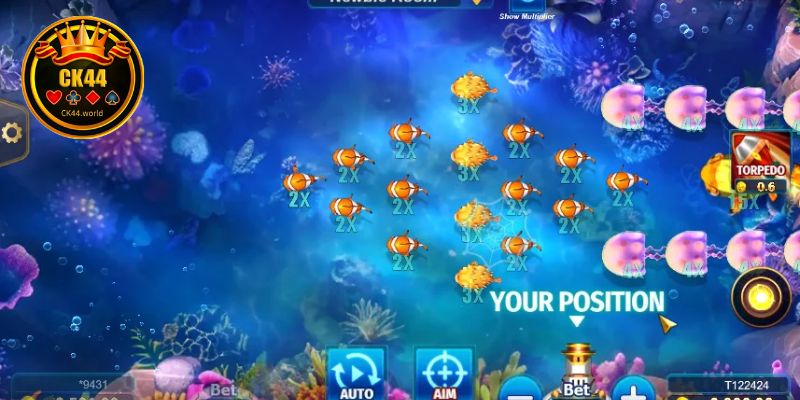
Unlike spin-based games, Happy Fishing resolves outcomes over time. A target may require several successful hits before a capture evaluation results in a payout. This means decision-making is ongoing, with frequent choices about whether to keep firing at a durable target, switch to lower-value targets, or adjust cannon level to change exposure.
Arena flow commonly alternates between baseline density periods and higher intensity moments. Baseline periods tend to feature many low-tier fish suited for steady play. Higher intensity moments may include denser schools, larger creatures, or special event fish that can shift the risk profile for a short interval.
Cannon Levels, Shot Cost, And Exposure Control
The primary adjustable parameter in Happy Fishing is the cannon level. Cannon levels increase the cost per shot and can also influence capture probability against higher-durability targets. Lower cannon levels are typically used to engage small fish efficiently, allowing many attempts with controlled spend. Higher cannon levels raise per-shot stake and are commonly reserved for larger targets where low-level cannons may be inefficient due to reduced capture probability.
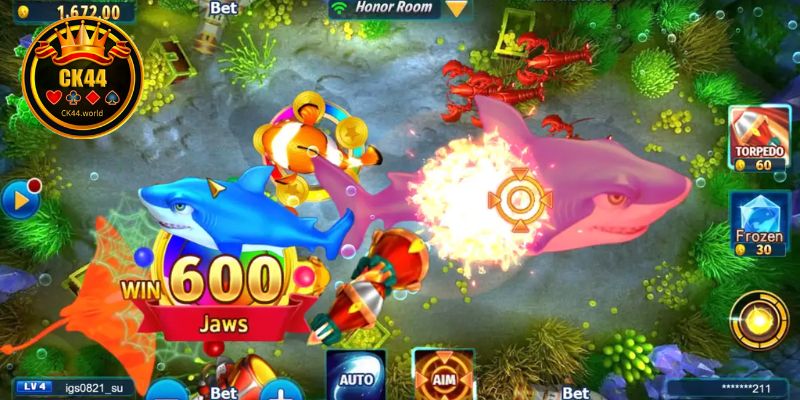
Cannon choice is an exposure lever because a higher cost per shot increases the rate at which credits are consumed. In continuous-play formats, this matters because firing frequency can remain high during dense screens. Happy Fishing is commonly designed so that cannon changes are quick, allowing adjustment based on the current target distribution.
- Low cannon: supports high-frequency attempts on small fish and lower session swings.
- Mid cannon: supports mixed targeting when medium fish dominate the screen.
- High cannon: supports premium fish pursuit and event windows but increases variance.
Higher cannon use does not create guaranteed outcomes. It typically increases potential payout scaling and improves contestability of durable targets, while overall capture remains probabilistic.
Target Tiers And Multiplier Structure
Happy Fishing usually organizes targets into tiers with associated multipliers. Small fish are abundant and carry low multipliers, producing frequent low-value capture events. Medium fish appear less frequently and offer larger multipliers with reduced capture frequency. Large and boss-class creatures tend to be rare, have distinct visual cues, and carry the highest multipliers, but they require more sustained investment and have lower probability of capture within a limited screen window.
Multipliers are generally applied when a capture is confirmed, producing a payout calculated as a multiple of the shot stake associated with the successful capture event. Because multiple shots may be used to secure a capture, net profitability depends on both the multiplier and the total expenditure required to achieve the capture.
| Target Tier | Typical Appearance | Capture Frequency | Outcome Role |
| Small Fish | High | Higher | Baseline activity and smaller returns |
| Medium Fish | Moderate | Moderate | Balanced risk and reward |
| Large And Boss Creatures | Lower | Lower | High variance and rare spikes |
Because tier value is visible on-screen through size and animation cues, target selection becomes a practical risk control. Happy Fishing allows low-tier harvesting to stabilize pacing, while premium pursuits typically increase swings.
Capture Probability And Hit Evaluation
Fish shooter titles commonly use probabilistic capture evaluation rather than deterministic health bars. Happy Fishing often presents visual hit effects that suggest damage accumulation, but capture is typically resolved through internal logic that considers target type, weapon level, and randomization. This prevents predictable capture timing and preserves balance across target tiers.
As a result, a target can absorb many hits without paying, and another target can be captured quickly. The correct interpretation is that each shot contributes to a sequence of capture opportunities rather than guaranteeing progress toward a fixed endpoint.
This also means that chasing a single durable target can become costly if the target remains un-captured as it approaches the edge of the screen. In Happy Fishing, deciding when to stop pursuit is as important as deciding when to start, because sunk cost can accumulate rapidly in continuous fire environments.
Special Fish, Screen Events, And Bonus Features
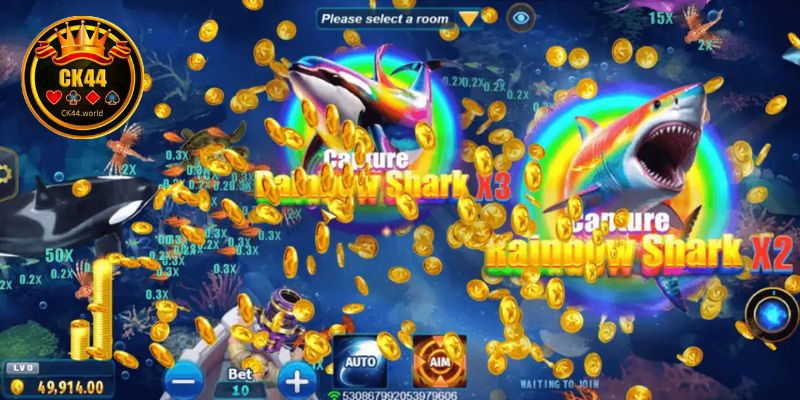
Happy Fishing commonly includes special fish that trigger temporary modifiers. These may include explosive targets that affect nearby fish, net-like effects that increase multi-target capture chances, or time-limited bosses that carry large multipliers. Feature fish are typically signaled through distinct visuals to allow immediate recognition.

Screen events can also change short-run conditions, such as increasing fish density, spawning a school wave, or enabling a temporary effect that slows movement. These events can create windows where a higher cannon level may be used more efficiently, although outcomes remain probabilistic.
Bonus features usually increase variance because they concentrate potential value into rare events. A successful high-multiplier capture can materially influence a session, while repeated attempts can consume substantial credits without return. Happy Fishing therefore treats bonus opportunities as optional risk escalators rather than as required progression steps.
Volatility Drivers And Session Variance
Happy Fishing volatility is shaped by continuous staking, which can increase exposure quickly relative to round-based games. Variance is largely determined by how spending is allocated across targets and how often premium opportunities are pursued at higher cannon levels.
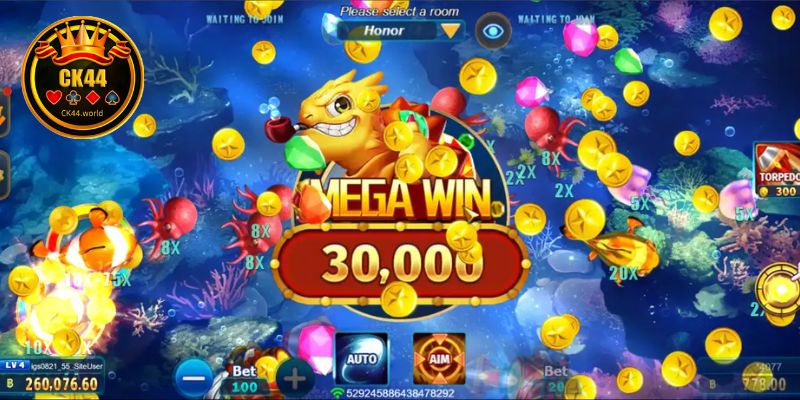
Key volatility drivers include:
- Shot cost scaling: higher cannon levels increase swing magnitude per minute.
- Target concentration: repeated boss chasing concentrates expenditure into fewer outcomes.
- Event timing: bonus waves can cluster outcomes into short windows.
- Firing cadence: rapid firing increases total exposure without creating guaranteed capture.
Short sessions can be dominated by the presence or absence of a single premium capture. Conversely, longer sessions often include a mix of baseline captures and occasional high-tier pursuits. Happy Fishing is therefore best interpreted as a system where variance is a structural property of target hierarchy and feature design.
CK44 Context For Happy Fishing Presentation And Clarity
On CK44, Happy Fishing is typically presented with clearly labeled cannon controls, visible target multipliers, and consistent capture confirmation feedback designed to support transparent interpretation of shot costs, special fish effects, and payout settlement in continuous-play sessions.

Author: Harry Ck44