
Chinese Poker is a poker-derived game focused on hand arrangement rather than betting rounds. Each player receives a set of cards and must divide them into three poker hands: a back hand, a middle hand, and a front hand. The goal is to set the strongest possible overall structure while obeying a ranking rule that prevents stronger hands from being placed in weaker positions. Because the game is scored by comparing hands rather than by building a single best five-card holding, Chinese Poker emphasizes combinatorial planning, risk control, and correct evaluation of hand strength across multiple lines.
Ck44 will explains how Chinese Poker is commonly played, including the basic setup, the hand-setting rules, fouling conditions, scoring approaches, and frequently used variants such as Open-Face Chinese (OFC). The emphasis remains rules-forward and evergreen, focusing on how outcomes are determined and verified.
Chinese Poker – Core Setup And Three-Hand Structure
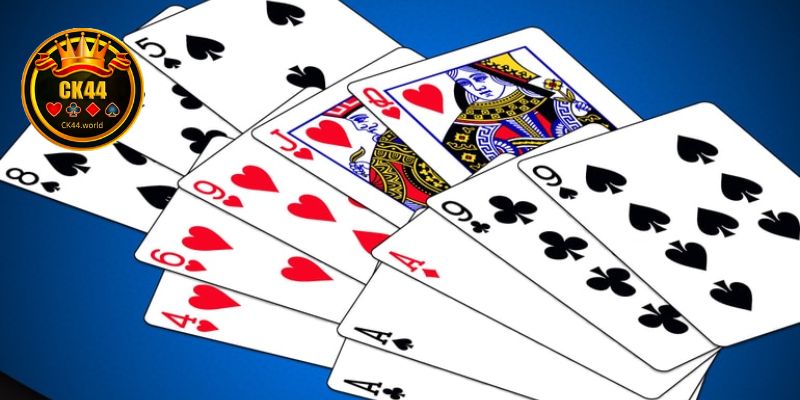
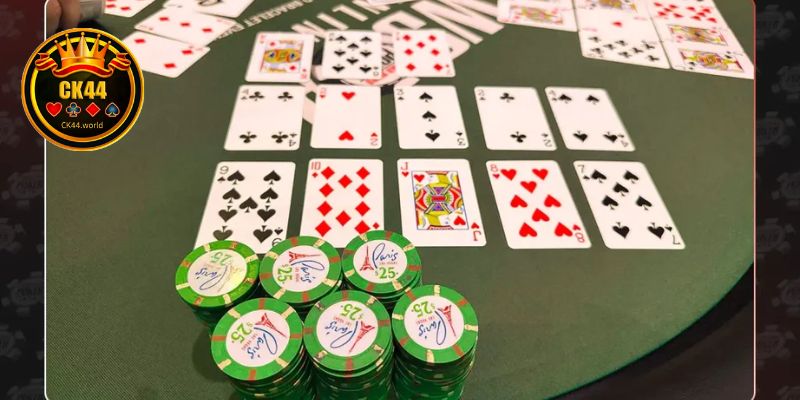
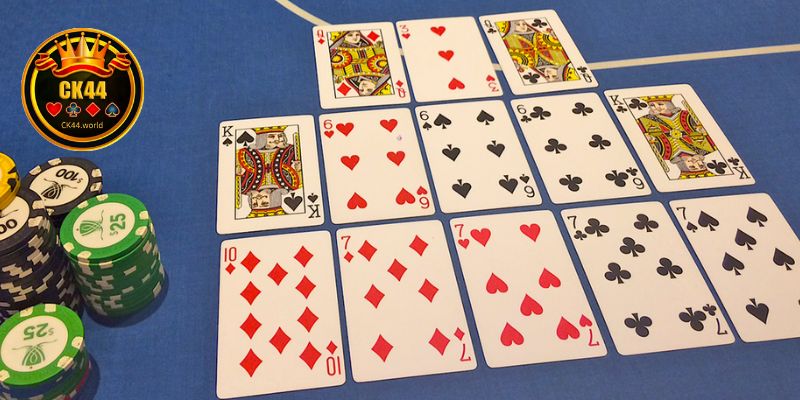
In standard Chinese Poker, each player is dealt 13 cards. Those cards must be arranged into three separate hands:
- Back hand: five cards, intended to be the strongest hand.
- Middle hand: five cards, intended to be the second-strongest hand.
- Front hand: three cards, intended to be the weakest hand.
All hands are typically revealed after each player sets their arrangement. The hands are then compared position by position against opponents: back versus back, middle versus middle, and front versus front. Each comparison yields a point win, loss, or tie according to standard poker hand rankings, adjusted for the three-card front hand where applicable.
The defining constraint is the ordering rule. The back hand must rank higher than the middle hand, and the middle hand must rank higher than the front hand. The order must be respected regardless of how attractive a distribution might look if hands were evaluated independently.
Hand Rankings And The Ordering Constraint
Chinese Poker uses standard poker hand rankings for the five-card back and middle hands: high card, one pair, two pair, three of a kind, straight, flush, full house, four of a kind, and straight flush. The three-card front hand generally follows three-card poker rankings: high card, one pair, and three of a kind. Straights and flushes do not typically apply to the three-card hand in most rule sets, though some house rules treat them as special, so the platform’s rule page is the correct reference when a front-hand exception exists.
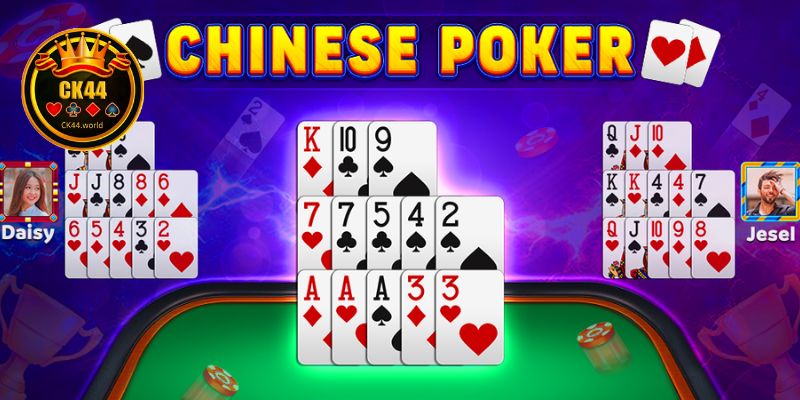
The ordering constraint requires that the five-card back hand be strictly stronger than the five-card middle hand, and that the middle hand be strictly stronger than the three-card front hand. This rule prevents players from placing a premium five-card hand into the middle while leaving a weaker structure in the back. It also creates planning tension: building a very strong middle hand can force the back hand to be even stronger, which may not be possible with the available cards.
Because the order must hold across different hand sizes, a common practical approach is to establish a back-hand anchor first and then ensure the middle and front hands remain below it in strength. However, this approach is only a planning convention, not a rule requirement.
Fouls And How Invalid Hands Are Treated
A foul occurs when the ordering constraint is violated. If the middle hand outranks the back hand, or if the front hand outranks the middle hand, the entire arrangement is typically considered invalid. In most common rule sets, a fouled hand loses automatically against the opponent on all three lines, often resulting in a maximum penalty outcome for that round.
Fouls are central to Chinese Poker risk management. Some arrangements can appear strong in one line but create an ordering violation when the complete structure is reviewed. For example, placing a full house in the middle hand requires the back hand to be at least a stronger full house or better, which is often not feasible without exceptional cards. Similarly, building a strong pair in the front hand can make it difficult to keep the middle hand above it while still leaving sufficient strength for the back.
Because fouls usually incur severe penalties, Chinese Poker strategy often prioritizes building a valid, balanced structure rather than maximizing one line at the expense of another. A slightly weaker but valid arrangement usually scores better than a high-risk structure that frequently fouls.
Basic Scoring By Hand Comparisons
After all hands are set and revealed, scoring is commonly performed by comparing each line independently. For each opponent, the back hands are compared, then the middle hands, then the front hands. Each line can be scored as one point for a win, minus one point for a loss, and zero for a tie, though point values can differ by platform.
Many rule sets also include a “scoop” bonus when a player wins all three lines against an opponent. This bonus is designed to reward a uniformly strong structure and to increase the penalty for an unbalanced or overly speculative arrangement. The size of the scoop bonus can vary, but the concept is consistent: winning all three lines yields additional points beyond the sum of individual line wins.
Because Chinese Poker is often played in multi-player tables, scoring may be calculated against each opponent separately and summed. This means a single arrangement can produce different comparative results against different opponents depending on how their hands are structured.
Royalties And Premium Hand Bonuses
Many Chinese Poker formats include royalties, which are bonus points awarded for achieving certain strong hands in specific lines. Royalties are typically line-dependent, with higher bonuses for achieving strong hands in the front or middle, where strong hands are harder to place without risking a foul.
While exact royalty tables vary, the general idea is consistent:
- Front hand royalties: often awarded for strong pairs and three of a kind.
- Middle hand royalties: often awarded for straights and above, frequently higher than back-hand royalties.
- Back hand royalties: often awarded for premium hands such as four of a kind or straight flush.
Royalties change incentives by making certain high-end structures worth pursuing even if they reduce line-by-line win probability. However, royalties also increase the importance of foul avoidance because a fouled hand usually forfeits both comparative points and royalty potential. In Chinese Poker, the practical value of a royalty line depends on the likelihood that a valid structure can still be maintained across all three hands.
Open-Face Chinese Poker And Progressive Dealing Variants
Open-Face Chinese Poker (OFC) is a widely played variant that changes how cards are received and set. Instead of receiving all 13 cards at once, players typically receive an initial set of cards and then draw additional cards in rounds, setting them face up as they go. This introduces commitment risk because early placement decisions constrain later options.
OFC commonly begins with an initial placement of five cards into the three hands. Subsequent draws add smaller batches of cards that must be placed immediately. Because later cards cannot be rearranged into earlier positions under standard rules, OFC increases the probability of being forced into a weaker structure or risking a foul if the remaining draws do not cooperate.
Some OFC rule sets include a fantasyland mechanic, which typically rewards players who set a sufficiently strong front hand without fouling by granting a special advantage in the next round, such as receiving all 13 cards at once or receiving more cards initially. The exact criteria and benefits vary, so platform-specific rules determine how fantasyland is triggered and resolved.
Whether in standard Chinese Poker or OFC, the core principle remains the same: three hands must be built with a strict strength order, and scoring is determined through line comparisons plus any applicable bonuses.
Variance Drivers And Practical Interpretation
Chinese Poker variance is driven by the tension between optimization and foul risk. Aggressive arrangements that chase royalties and scoops can produce high swings, while conservative arrangements that prioritize validity can produce steadier results but may concede bonus opportunities. Because all players receive a full set of cards and then commit to a structure, variance is also shaped by the distribution of strong combinations across the table in a given hand.

Several factors commonly influence outcome dispersion:
- Royalty tables: larger bonuses increase the value of rare premium structures.
- Scoop bonuses: enhanced rewards for three-line wins increase swing potential.
- Table size: more opponents increase the number of comparisons per round.
- Foul penalties: strict foul treatment increases downside for speculative settings.
Because each hand is an independent deal, short-run streaks can occur naturally. Reliable interpretation focuses on rule application, correct ordering, and coherent structuring rather than on perceived patterns in incoming cards. In Chinese Poker, the most consistent advantage is typically derived from avoiding fouls while allocating strength efficiently across the three lines.
CK44 Context For Chinese Poker Presentation And Verification
On CK44, Chinese Poker is typically presented with clear line-order rules, transparent royalty and scoop scoring tables, and consistent hand-history records that support verification of fouls, line comparisons, and final point settlement.

Author: Harry Ck44